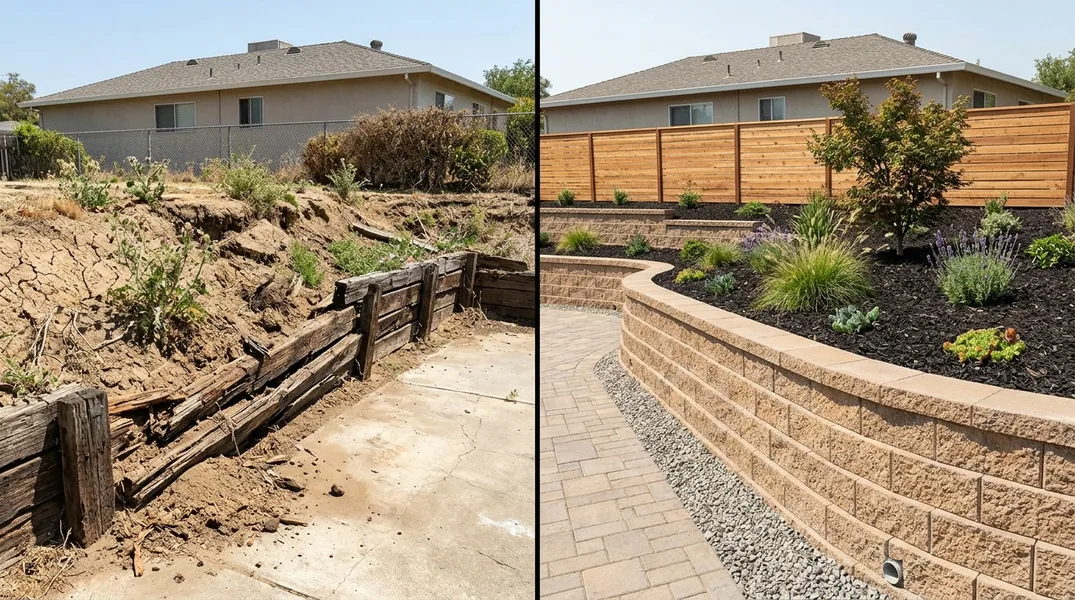
Why Stockton's Adobe Clay and Delta Soils Demand the Right Wall Material
If you own property in Stockton, you already know that the ground here is not like the sandy or rocky soils you might find in other parts of California. Much of the area sits on adobe clay, a dense, heavy soil that expands when it absorbs water and shrinks as it dries. Add in the Delta influence, with high water tables and seasonal moisture changes near the waterways, and you have a recipe for soil movement that can wreak havoc on a poorly chosen retaining wall.
The material you select has to do more than look good. It must handle hydrostatic pressure from saturated clay, resist settling and shifting, and drain well enough to keep water from pooling behind the wall. A wall that ignores these realities may look fine for a season or two, then start leaning, cracking, or bulging. That is why understanding your soil before you pick a material is the first step in any successful project. When homeowners call us for Retaining Wall Installation, we start by evaluating the site, the slope, and the drainage patterns, because those factors point directly to the best material for the job.
Concrete Retaining Walls: Strength for Heavy Clay and Tight Spaces
Concrete Retaining Walls are one of the most reliable choices for Stockton properties dealing with adobe clay. Poured concrete is extremely strong and can be engineered to resist the lateral pressure that saturated clay exerts. It also takes up relatively little horizontal space, which matters on smaller lots or along property lines where you cannot afford a wide wall footprint. For taller walls or situations where the soil is especially unstable, concrete is often the safest bet.
The tradeoff is that concrete walls require proper engineering, including footings that extend below the active soil zone and weep holes or drainage systems to relieve water pressure. They also have a more utilitarian look unless you add a decorative finish, such as stamped or textured surfaces. If your wall is holding back a significant load and you want long-term peace of mind, concrete is hard to beat. We often recommend it for structural walls near foundations, driveways, and steep grades where failure is not an option.
Block Retaining Walls: Versatile and Homeowner Friendly
Segmental block retaining walls, sometimes called block retaining walls, are a favorite for residential projects in Lodi and throughout the region. These interlocking systems are designed with built-in setback and drainage features, which helps them handle the movement that clay soils create. They come in a wide range of colors, textures, and sizes, so you can match the look of your home or landscape while still getting solid performance. For walls under about four feet, many block systems can be installed without heavy engineering, which keeps projects more affordable.
Block walls are also easier to repair or modify than poured concrete. If a section settles or a block cracks, individual pieces can often be replaced without rebuilding the entire wall. That flexibility is valuable in a climate where soil conditions can shift over time. Keep in mind that proper base preparation is critical with block walls. A compacted gravel base and a well-designed drainage layer behind the wall are what keep the system stable in adobe clay. When those steps are skipped, even a high-quality block wall can fail.
Boulder Retaining Walls: Natural Look, Serious Holding Power
Boulder retaining walls bring a rugged, natural aesthetic that fits beautifully with the California landscape. Each boulder is heavy enough to resist movement, and the irregular shapes create a wall that looks like it belongs on the property. For homeowners in Manteca and nearby areas who want a more organic feel, boulders are an excellent option. They work especially well on slopes and in landscape beds where you want the wall to blend into the surroundings.
From a structural standpoint, boulder walls rely on mass and careful placement. The largest boulders go at the base, and each stone is set so it leans slightly into the slope. This design helps the wall handle the pressure from clay soil, but it does require an experienced installer who knows how to seat each boulder correctly. Gaps between stones allow water to drain naturally, which is a real advantage in wet Delta conditions. The main limitations are cost and availability, since large boulders are heavy and require equipment to place. For the right property, though, a boulder wall can last for decades with minimal maintenance.
Matching the Material to Your Stockton Property
There is no single best material for every wall. The right choice depends on the height of the wall, the slope, how much water the area receives, your budget, and the look you want. A low garden wall in a dry corner of the yard may be perfectly served by block, while a tall structural wall holding back a saturated clay slope near a foundation calls for concrete or engineered block. Boulder walls shine in landscape settings where their natural appearance adds value. A professional assessment takes all of these factors into account before any material is ordered.
It also helps to think about the long term. A wall that is properly designed for Stockton's soils will need less maintenance and will hold its value. If an existing wall is already showing signs of trouble, such as tilting, cracking, or water pooling behind it, Retaining Wall Repair may be possible, but sometimes Retaining Wall Replacement with a better-suited material is the smarter investment. We are happy to walk your property, explain your options, and provide a free estimate so you can plan with confidence.
Retaining Wall Installation Near Me: When to Call a Professional in Stockton
Some small landscaping walls are within reach of a confident do-it-yourselfer, but walls that hold back significant soil, sit on a slope, or manage water near a foundation are a different story. In Stockton's adobe clay, the consequences of a poorly built wall can include cracked patios, shifted fences, water intrusion, and even damage to your home's foundation. A professional installer understands soil behavior, drainage, and local building requirements, and can size the wall and its footings correctly from the start.
If you are unsure whether your project needs a pro, ask yourself a few questions. Is the wall taller than three or four feet? Is the soil heavy clay that stays wet in winter? Is there a structure, driveway, or pool above or below the wall? If you answered yes to any of these, it is worth getting expert input. You can reach Stockton Retaining Wall at (209) 290-1372 to discuss your project, or request a free estimate online. We serve homeowners throughout the area and can help you choose a material that will stand up to local soil conditions for years to come.
Looking for a professional retaining wall contractor in Stockton? Stockton Retaining Wall responds fast for all your retaining wall needs.
Get a Free QuoteOur services: Retaining Wall Installation · Retaining Wall Repair · Retaining Wall Replacement